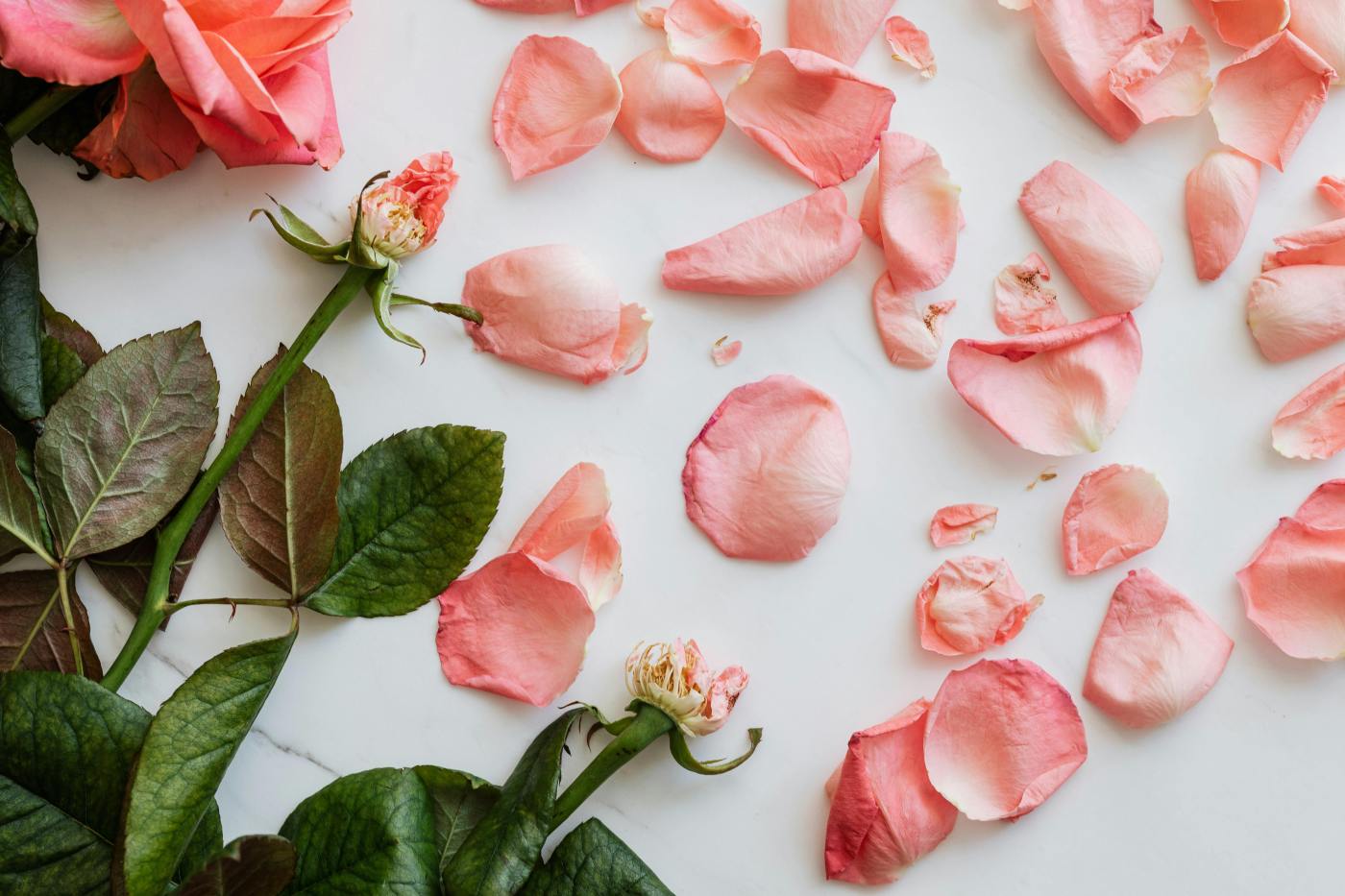
Once again, Mother’s Day has come upon us. We are reminded of it in all the advertisements for flowers, perfumes, spa days, candles, restaurants… On the radio, TV, streaming services, billboards. Even walking into grocery stores, we are bombarded by pink… things. Supposedly pink represents motherhood.
And once again, those of us with complicated feelings (or lack thereof) towards our own mothers are left trying either to block it all out, or else grapple with what to feel, think, or say in the lead up to Sunday. It’s not that we want to take away from the day for others, it’s just that, for some of us, we’ve never really known how to celebrate mothers who were complex or problematic, abusive, absent, or ill.
There’s a memory I have, that I cannot seem to bury. Maybe I don’t really want to, because as painful as it is to remember, to re-live the gut-wrenching feelings of fear, and guilt, and sadness that a 9 year old should not have had to feel, maybe it’s an important memory to hold on to. Maybe it helps me to make sense of the blood-and-guts-strewn minefield that was my relationship, or non-relationship, with my mother before she passed away.
I had answered the phone to my mother calling from her respite housing. We knew it was her, because we recognised the number. The phone got passed around from person to person, because nobody wanted to be the one to answer it. That was often the way when mum called.
Finally I gave in, and tentatively spoke in a small voice, ‘Hello?’
I remember trying to brace myself emotionally for the different scenarios that could take place. Maybe she would be drunk and crying, apologising for things I didn’t understand or repeating how much she loved me. I hated that one the most, because I didn’t know how to stop her sadness, or reassure her that I loved her too in any way that seemed to convince her. Maybe she would be putting on a pained voice and ask me if my father was home, or if I knew whether or not my siblings might have money they could lend her. Maybe she would even venture so far as to ask if I had any money, before laughing the comment off as a joke. There was a chance she would laden on me the burden of her troubled soul, and talk about how hard things were for her for a little while before asking to be put on to any of my older siblings or father.
Any of what might come, of course, would only come after precursory small talk about how I was and what I was doing at school. I almost hated that more than the crying, but I still can’t really tell why. Maybe I was mad at her, and then ashamed that I was, that she had to ask me over a phone. Or maybe I never knew whether she really wanted to know, or if she was just warming me up so that I would assist her in trying to manipulate something, mostly money, from another family member. Maybe I was just shy, because it was little better than a stranger asking me to tell them about my life.
I gave short answers in response to the questions, and eventually we got to the point. Dad wasn’t home, so I could say that confidently and honestly – she can’t speak to Dad. Neither was my oldest sister; though I’m pretty sure mum was calling the home phone because she had already tried to reach my sister on her mobile. Then she asked for my brother… and my chest tightened. I wouldn’t learn the phrase “fight or flight” for many years yet.
What could I do? I looked up at my brother, who was watching me warily. His lips flattened into a line and he firmly shook his head. But I had been brought up not to lie… and I was at an age now where I was learning to enact my values, especially the values that the pastors told us are God’s Way. I took a shallow breath.
‘He is… But,’ Another shallow breath, ‘I… don’t think he wants to talk to you Mum.’
My brother nodded his head encouragingly.
This was a defining moment. Before this, I had always been too young to really be involved in the decisions made about how we spoke to or acted around Mum. I would only ever have to hand off the phone, perhaps a little too relieved, to whoever she asked for. But lately, I had been noticing how distressed her phone calls made my siblings. I would see the pain and frustration in their faces, hear it in their voices. I would watch them run rigid fingers through their hair, or pace the room with tension in their shoulders. I would hear my Dad’s voice raise as he repeated that he would not finance her addictions. But I knew that eventually, one of them would break and do it. “Lend” her their own money, even my siblings as teenagers in after-school jobs. Because you can only tell someone you love deeply, ‘No.’ so many times. Her persistence usually won out.
Until, that is, my big brother had started standing firm in his boundaries, and teaching me to do the same. He had been teaching me – as best as he could with his own limited life experience – about addiction, and manipulation, and how giving in to Mum’s demands when we know they are not healthy will only help her to hurt herself, while hurting us too. My big brother, who taught me a lot about how to navigate life. How to overcome fears. How to follow Jesus. My big brother who, putting on a brave face while shaking his head at me, was masking his own pain and fear and sadness that I could still see there in his eyes, in his posture. And when she asked me to hand him the phone anyway, her voice slightly colder now, I knew I could get away with simply doing as I was told. But how could I throw the grenade to him, when he and my two other siblings had shielded me from so many explosions before?
‘No, Mum.’ I remember being surprised by how strong my voice stayed, even though I felt like I was shaking.
She asked again, more agitated and demanding now, and I again I heard my voice calmly and firmly leave my lungs, ‘He doesn’t want to speak to you.’
I’m not sure if it was because it hurt my ears, or purely out of fear that I whipped the phone away from my face as the screaming began from her end, demanding I listen to her because she is my mother and to put my brother on the phone. I had tried the “fight”, now it was “flight”. Even typing this, my pulse is rising, my heart thumping in my chest, my stomach turning as I remember exactly where I stood in the dining room, how my body felt, staring at the phone in my right hand. It came so suddenly, my brother and I were shocked into silence, watching the plastic device in my hand that was screaming vehemently at us in our quiet house. It all happened only in a few short seconds. The noise, the fear, the shock… and finally, my shaking thumb finding the red button on the phone and pushing it, without my entirely willing it to. It felt like turning off the T.V. when it got too scary, to make the horror go away and remembering that you are safe on your coach at home.
Except the horror didn’t go away. It bore down on me, filling my lungs and squeezing my gut. The guilt and grief of hanging up on my Mum when she was in need… it symbolised something much deeper than that moment. That simple act embodied the devastation of how desperately, with my whole 9-year-old being, with burning in my kidneys, I wanted to help her; to take her pain away; to make things okay and make her know how much I loved her. To take away her addictions and her (mental) sicknesses and stitch our family up so that no one had to hurt anymore… But how helpless I was to do so. How I had to choose between protecting my siblings and myself, or protecting her. And I could not protect her. None of us could, lest we destroy ourselves and the rest of the pieces of our family that my Dad was trying to glue back together.
I remember, even as my brother came over to me and comforted me, assuring me that I had done the right thing, the guilt and the shame that was not fair for me to burden – for any of us to burden – filling every part of me.
Those feelings would haunt the rest of my relationship with my mother. The desperation to help – praying for her so hard that my chest would hurt, trying to have sleep overs at her place when she finally got her own apartment, trying to tell her that I loved her in ways that she might believe. And the guilt. Because as I grew up, I realised that just as I had distanced myself from her that night by hanging up the phone, I needed to distance myself from her to avoid subjecting myself to her manipulation and mood swings, her drunken anger and deep depressive episodes, her persistent begging for money, her paranoia and deep anxieties; from her pain that I could not help but absorb; from the shame and turmoil that I could do nothing to help her, burning like jagged shrapnel stuck in my spirit. But with the distance came the guilt: that I was a horrible daughter. That my older siblings did so much more for her, they loved her so much better than I did. They visited her more, they knew her more. That I was so selfish, so terrible toward her.
The hardest, most destroying thing about that night when I hung up on my mother, was knowing that when her anger subsided, she would be torn apart, haunted by her own actions towards us. That she was not in control of herself, but present enough to despise herself for it.
My Mum committed many wrongs, ranging from petty to severe, against my family. But my Mum was a deeply loving woman. Mum had a kind and generous heart – a heart that was too soft towards others in pain, often asking us for money because she had lent her own to a dubious neighbour who was “in need”. She connected with others, and told jokes, and made people smile, even when she herself was in need and in pain. She had these spiritual eyes that saw the truth in people; she saw the gifts and hearts within others that even sometimes they could not see. She was caring and maternal, even though she didn’t mince her words. She went to pains to create crafts and write cards and give small, ragged gifts that she thought might make others happy, to remind people that she loved and prayed for them. That was the Mum my siblings got to see before things went bad, when I was still young. But sometimes, I would see her too – and it would be like the sun had come up on an icy winter morning, melting away all the frost.
This is the woman I choose to remember my Mum as; all the bright, dazzling beauty that immense trauma and severe mental illnesses had done their best to destroy. I imagine who she might have been had mental healthcare been as advanced back then, or better yet, had her own parents not decimated her innocence with unspeakable abuse. I imagine her now, standing with Jesus as a new creation, all sickness and fear and pain gone forever, what she must be like.
But I also have moments when the reality of my experience with her pierces my heart; when someone says something that triggers the memories, when I reminisce on my own, see pictures of our childhood, or need to work through some complex emotion in counselling.
On Mother’s Day I remember.
I remember that I do not have a mother with me in this life anymore, but that I also never really did. As much as she wanted to be, and as much as I wanted to make her feel like she was. And, true, I never doubted her love for me. At least I had that – the knowledge that she deeply loved me and deeply regretted the way things were. That she believed in me, saw all of the good things in me and never spoke of the bad. That she thought I was beautiful, and maternal, and had a lovely singing voice that she wished I would use more. That, if I told her I had achieved even something little, she would be so excited for me.
And I know that this is a wonderful gift that not everyone has the privilege of.
But I do struggle to know how to feel on Mother’s Day. Sad, yes. Sad that she is gone, sad because of her life when she was here. Happy because of the love, however brief, she did share. Guilty because I wasn’t strong enough to be a better daughter, but empathy because I know I did only what I felt I had to in order to keep myself safe. Hopeful that when I see her again, I will get to know her true, beautiful, pain-free heart. Hopeful, too, that the lessons I learned from my grief-ridden journey with her have made me stronger, and more equipped to sit with others who also do not know how to feel on days like these. Hopeful that perhaps I can be to others a little bit of what she always wanted to be for me, but could not; what she always believed I would be.
For some people, Mother’s Day is a day to celebrate. For others, it is a time to mourn loss. For others still, it is a time to mourn what we never had, even grieve atrocities committed against us by the one who should have been protecting us.
It is okay to not know how to feel at this time. It is okay to take the day to reflect, to grieve, to take care of yourself and to breathe deeply – knowing that you are deserving of so much more love than you were given. I knew, at least in part, a side of my mother that I can focus on and look forward to seeing again in the next life; but if you weren’t afforded even that, take a moment this Mother’s Day to reflect on the fact that there are mothers today who are working hard to break generational cycles of abuse or trauma. There are mothers who are doing their best to ensure that their children won’t ever have to experience a complex Mother’s Day. There are women – some mothers, some who never were – who wish for you to experience a love that is not conditional, not demanding, not retractable. Whether they are older, or your peers, or even much younger than you; I firmly believe that all women have a mother’s love within themselves that they are created to share with the world. Look for these women this mother’s day. Let a mother’s love find you where you are.
 The Restless Sojourner
Leave a comment